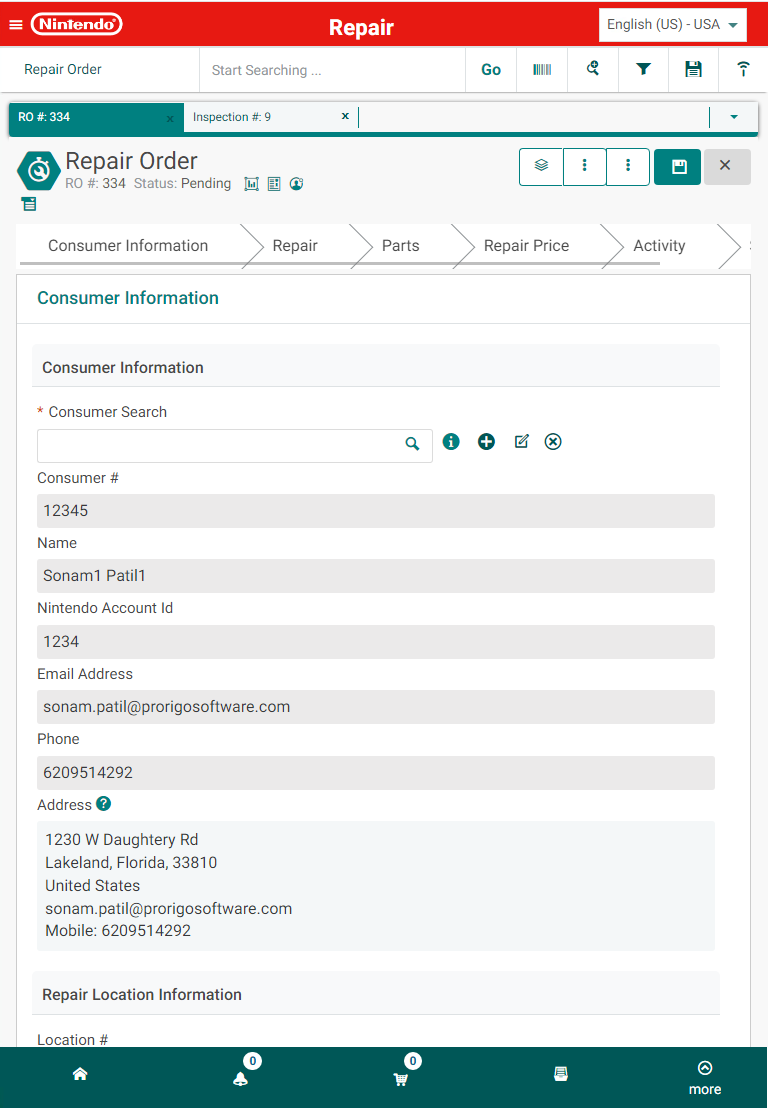
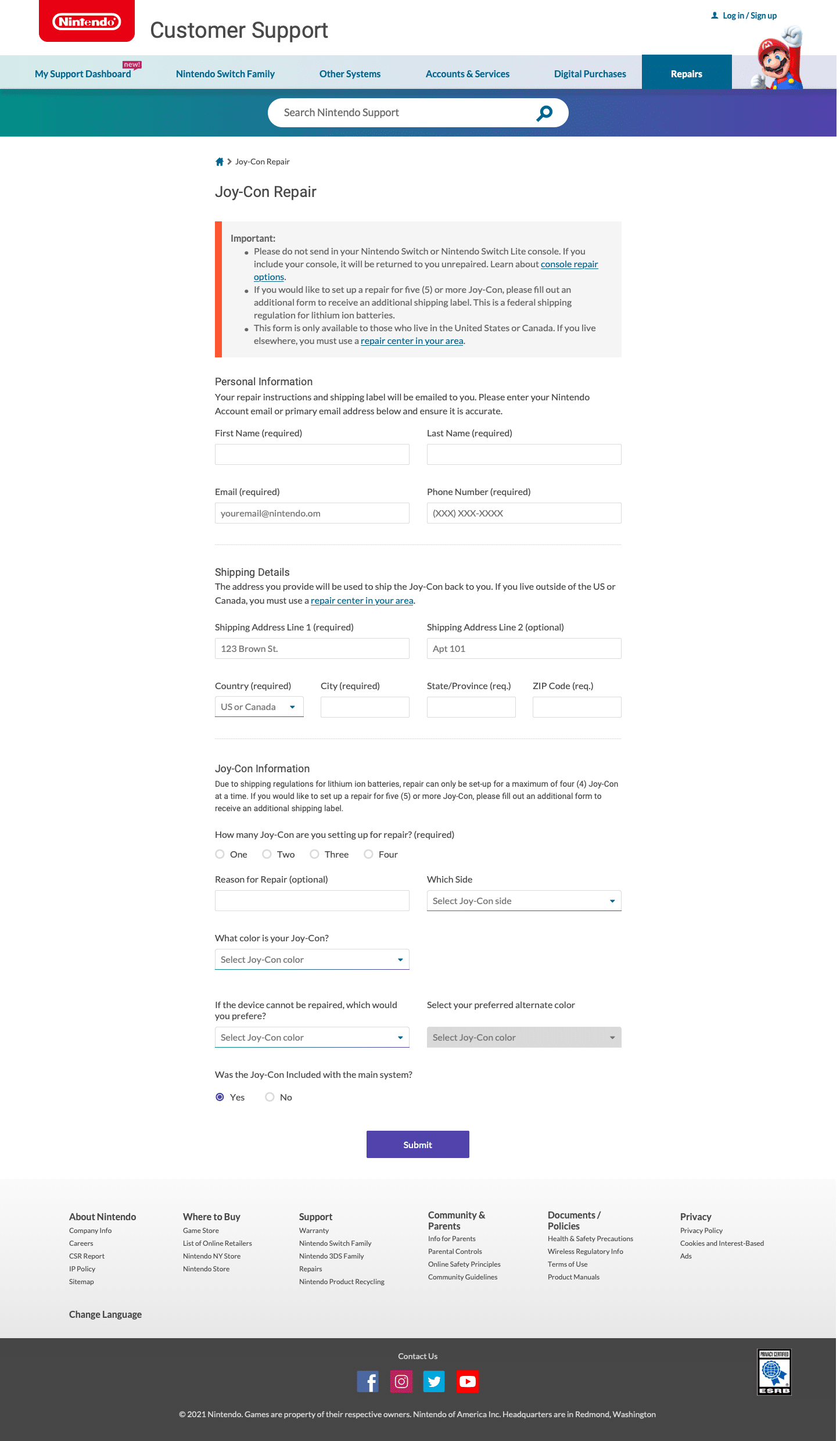
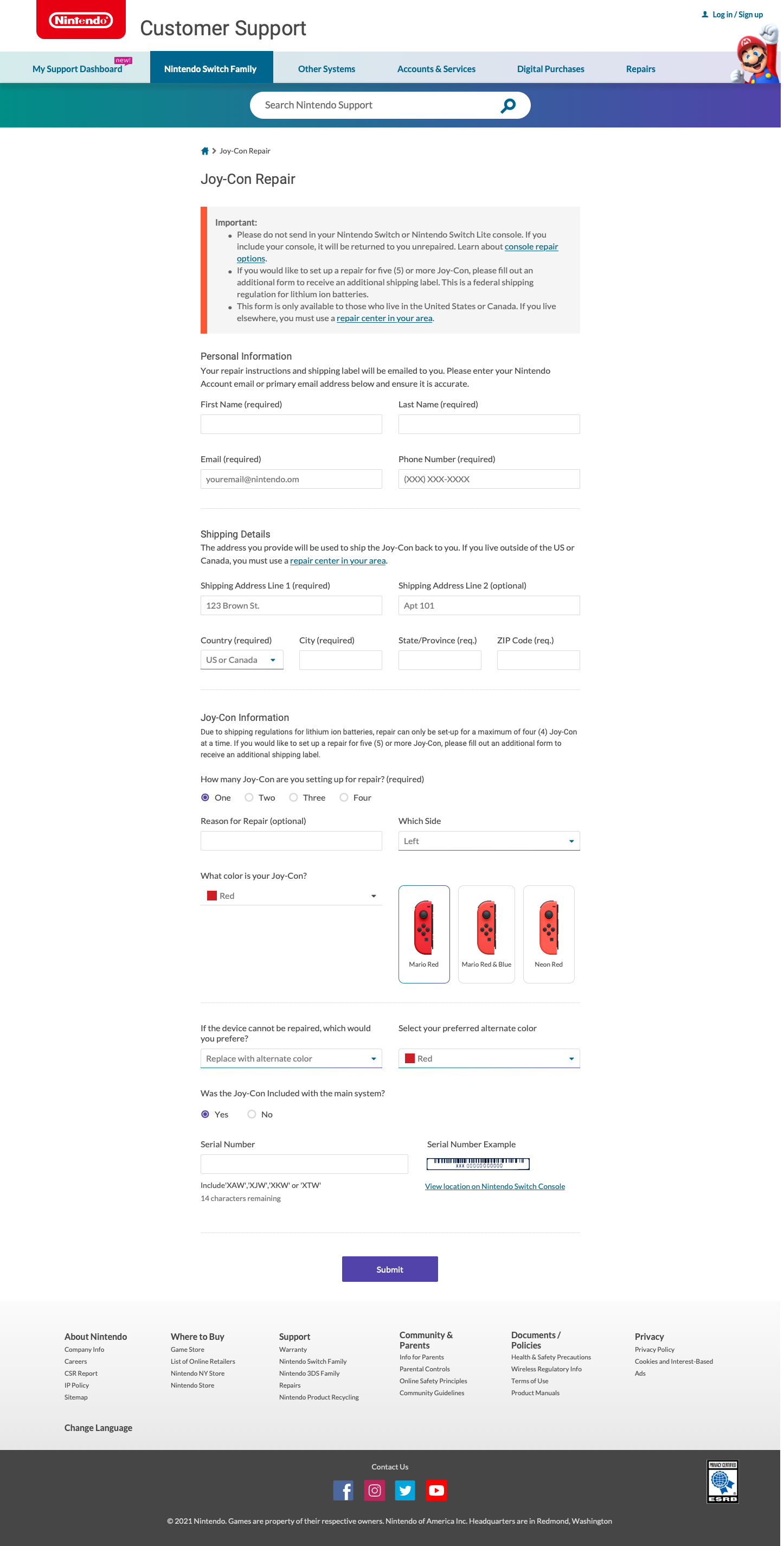
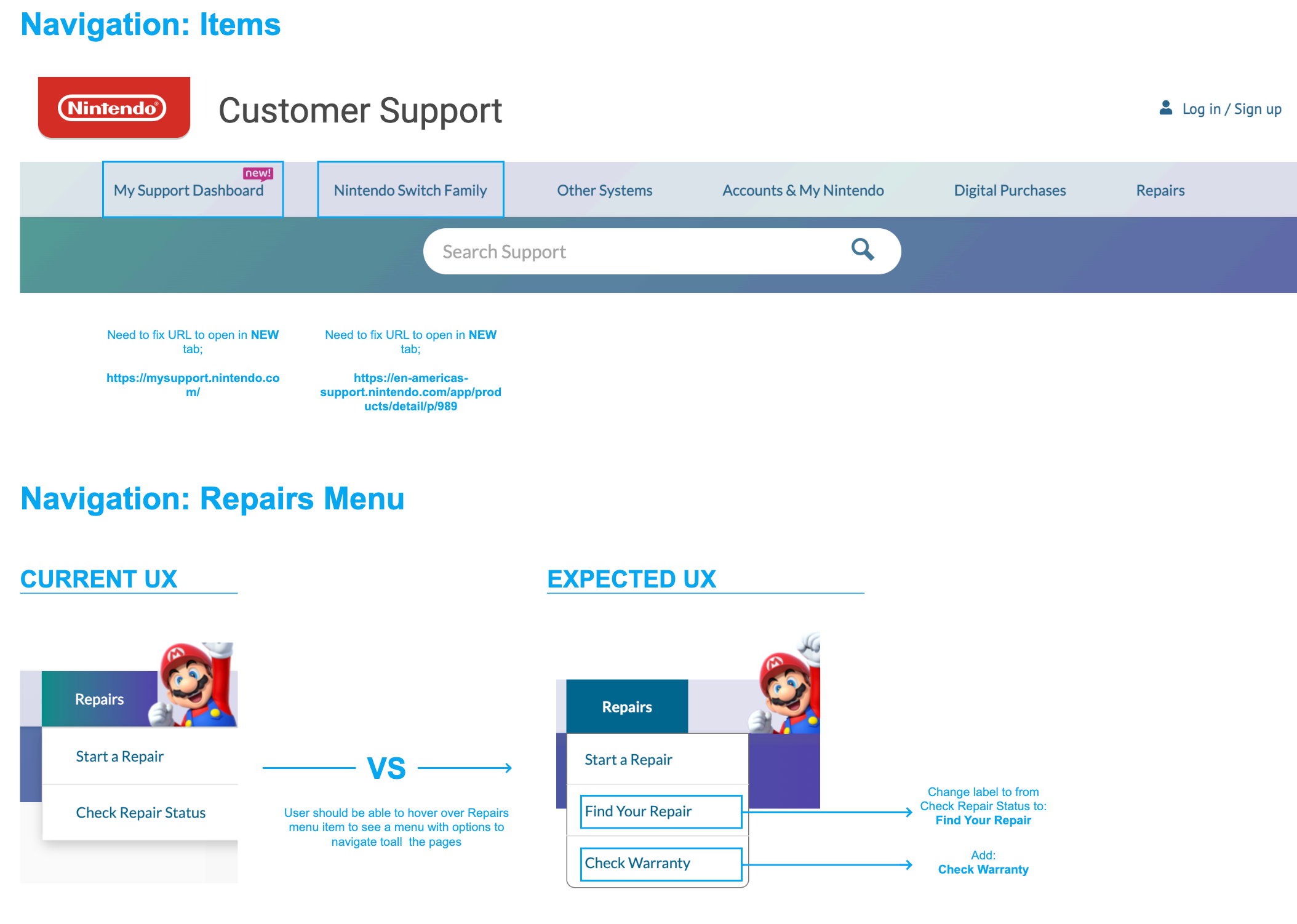
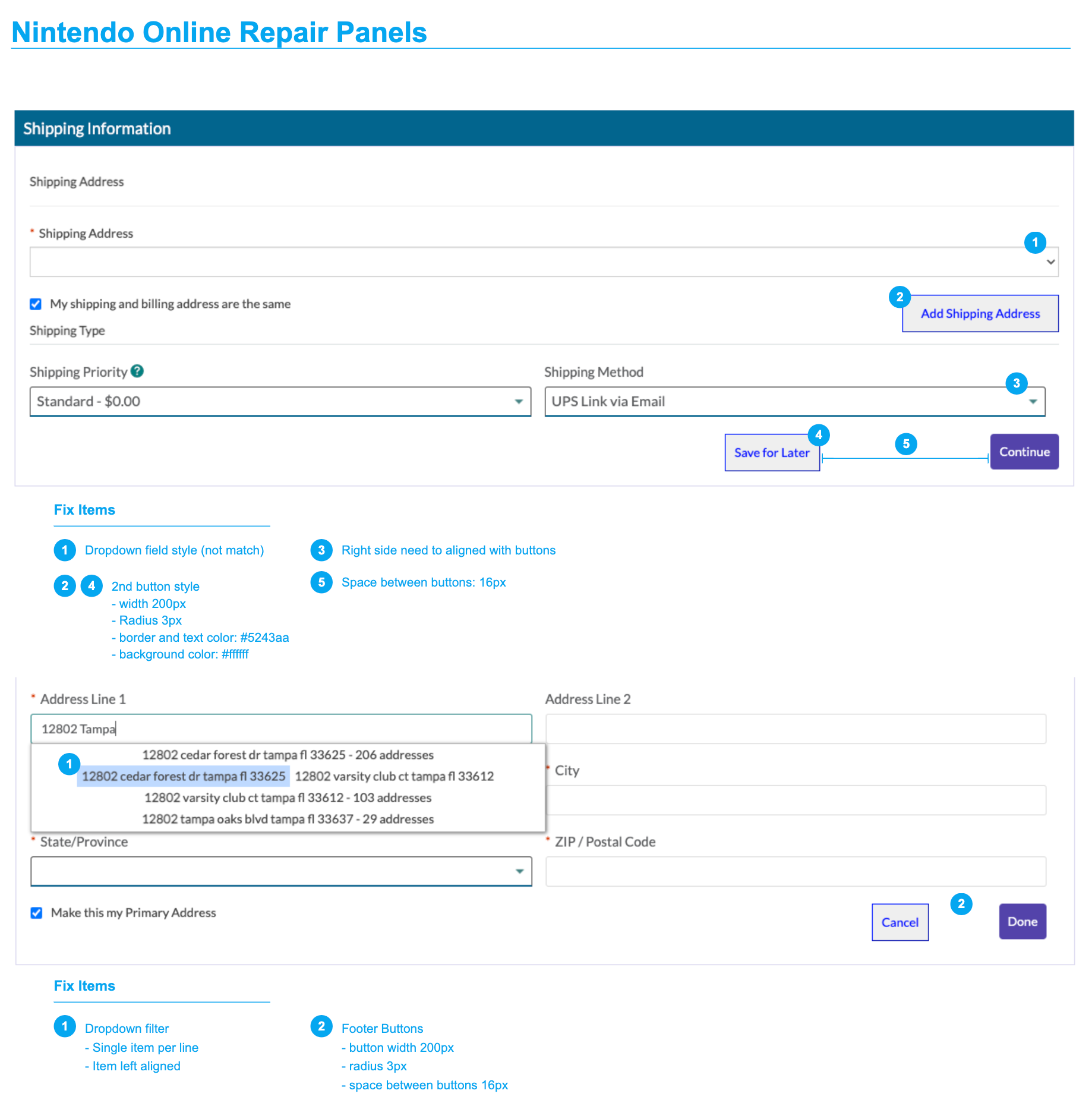
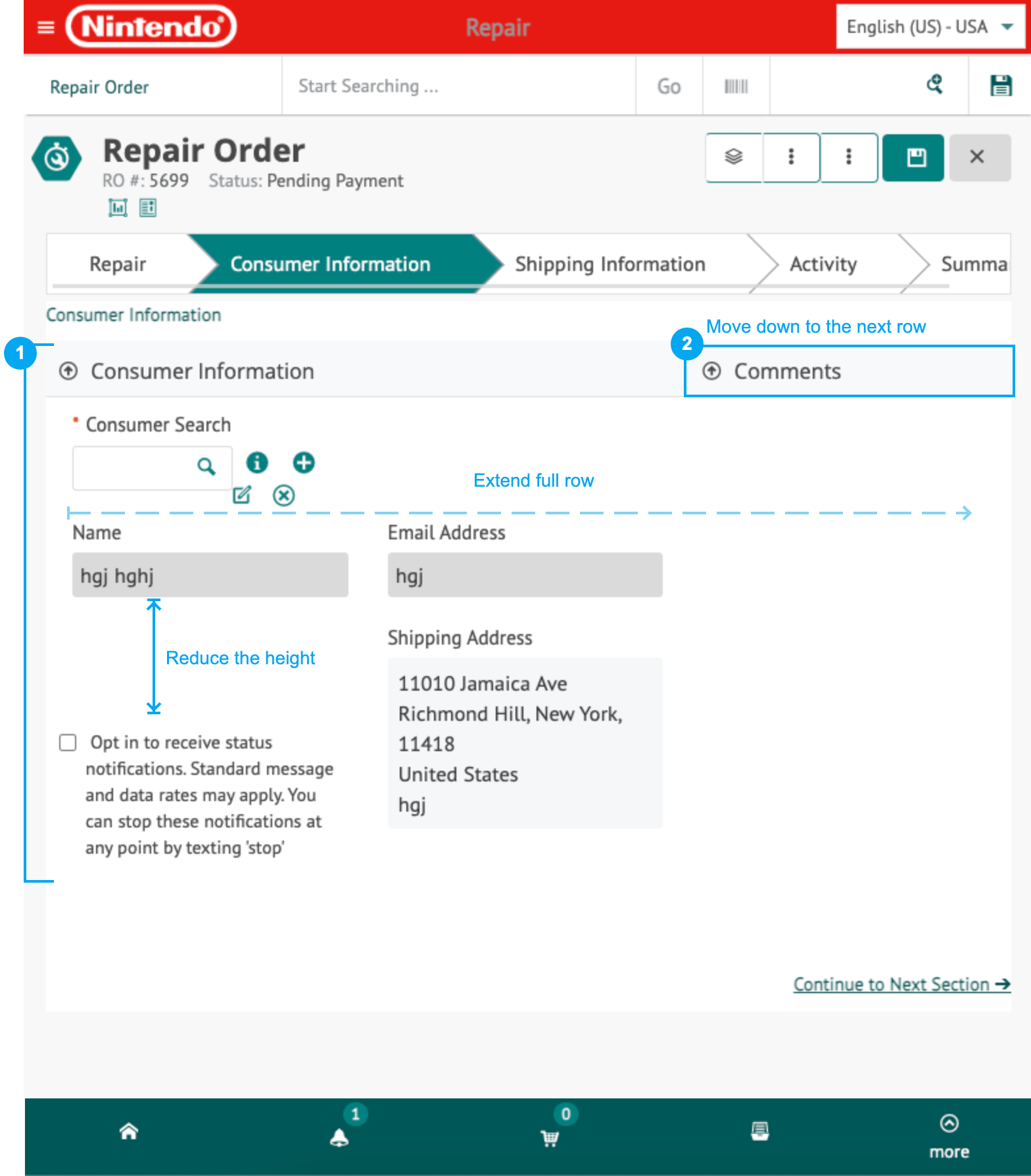
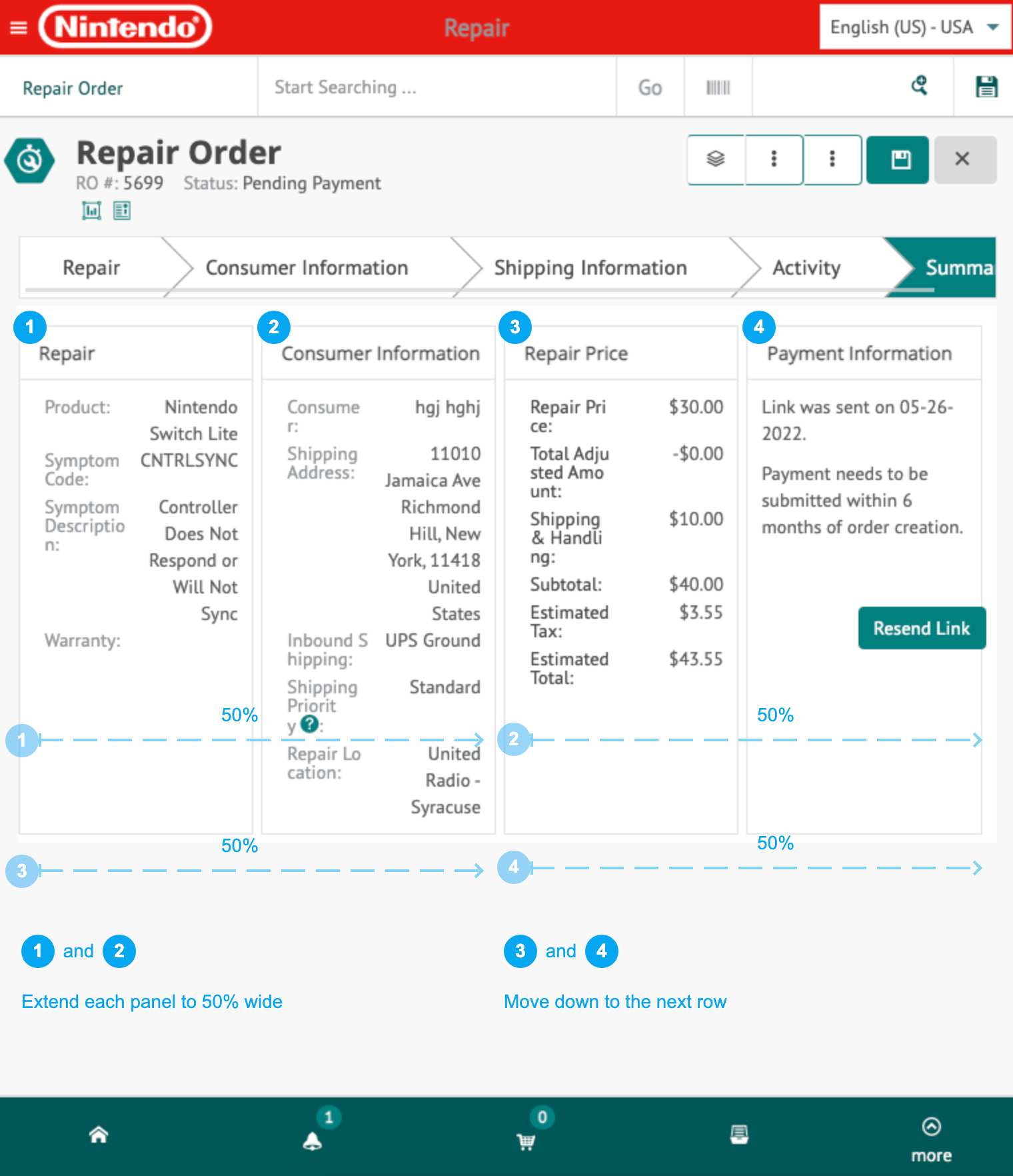
Transformed an out-of-the-box repair system into a fully branded, seamless experience—bridging UX design and front-end implementation under heavy system constraints. Role: Product Designer (UX + Front-End) Platform: Web Responsive Company: Mize / Syncron
Overview
My Role
Redesigned end-to-end repair flow
Built high-fidelity branded prototypes
Implemented custom CSS in a restrictive system
Conducted accessibility audits (WAVE, Axe)
Collaborated across product, UX, and engineering
Goal
Design a seamless, branded repair experience that:
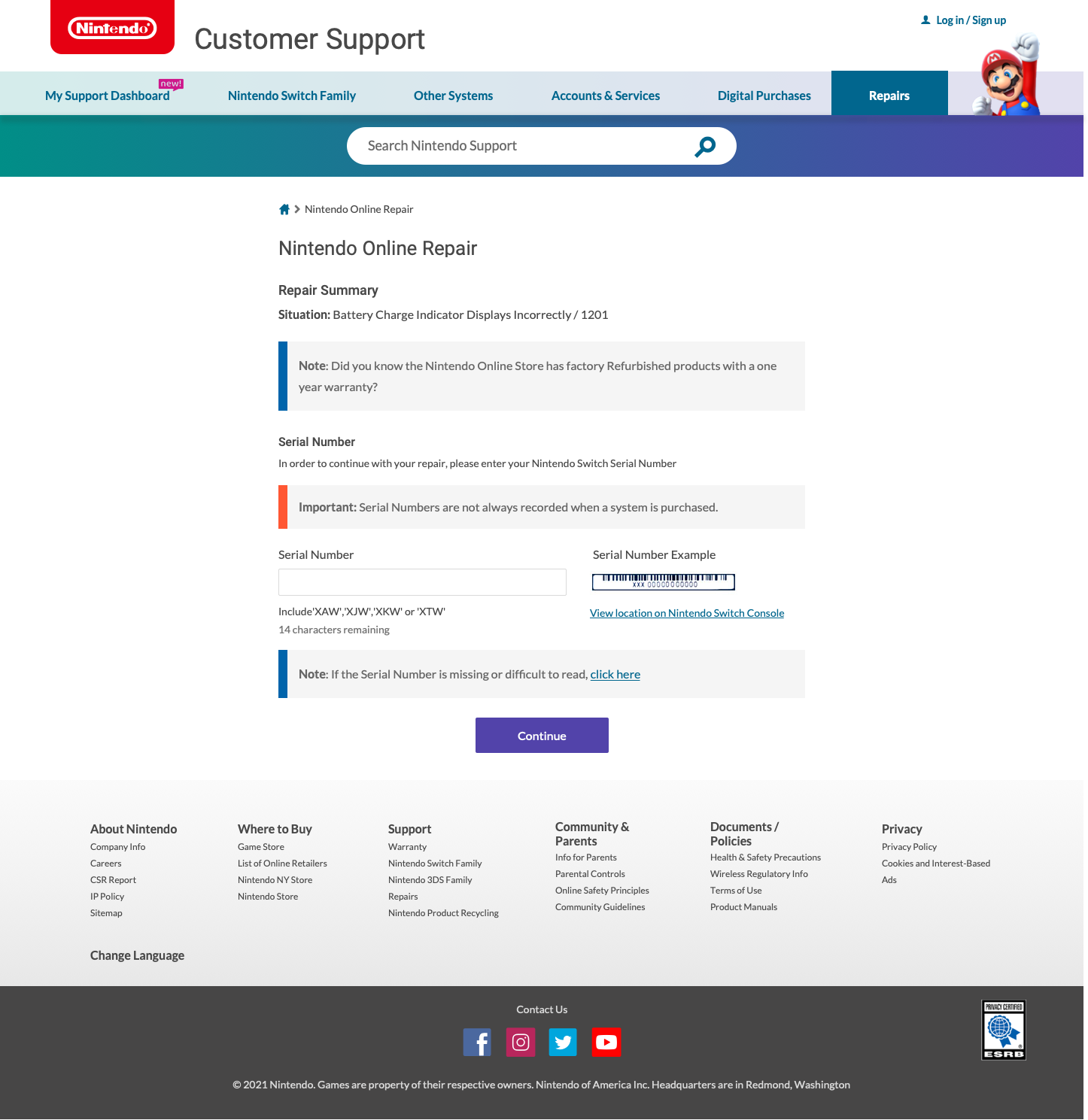
Matches Nintendo’s support site visually
Maintains consistency across customer + agent portals
Works within a highly constrained system
Meets accessibility standards
The Problem
Netendo, a high-profile enterprise client, required a fully customized repair application that visually matched their consumer-facing website. The existing system delivered a generic, out-of-the-box interface, creating a disconnected user experience and breaking brand continuity.
The challenge was to bridge the gap between the front-end design system and a rigid back-end application framework—ensuring visual and interaction consistency without compromising system functionality.
Key Challenges
A. System Constraints
Platform not built for full customization
Styles frequently overridden
B. No Documentation
No guidance for modifying system CSS
Required reverse-engineering
C. Cross-Portal Dependencies
Changes in one portal impacted another
High risk of regression
My Approach
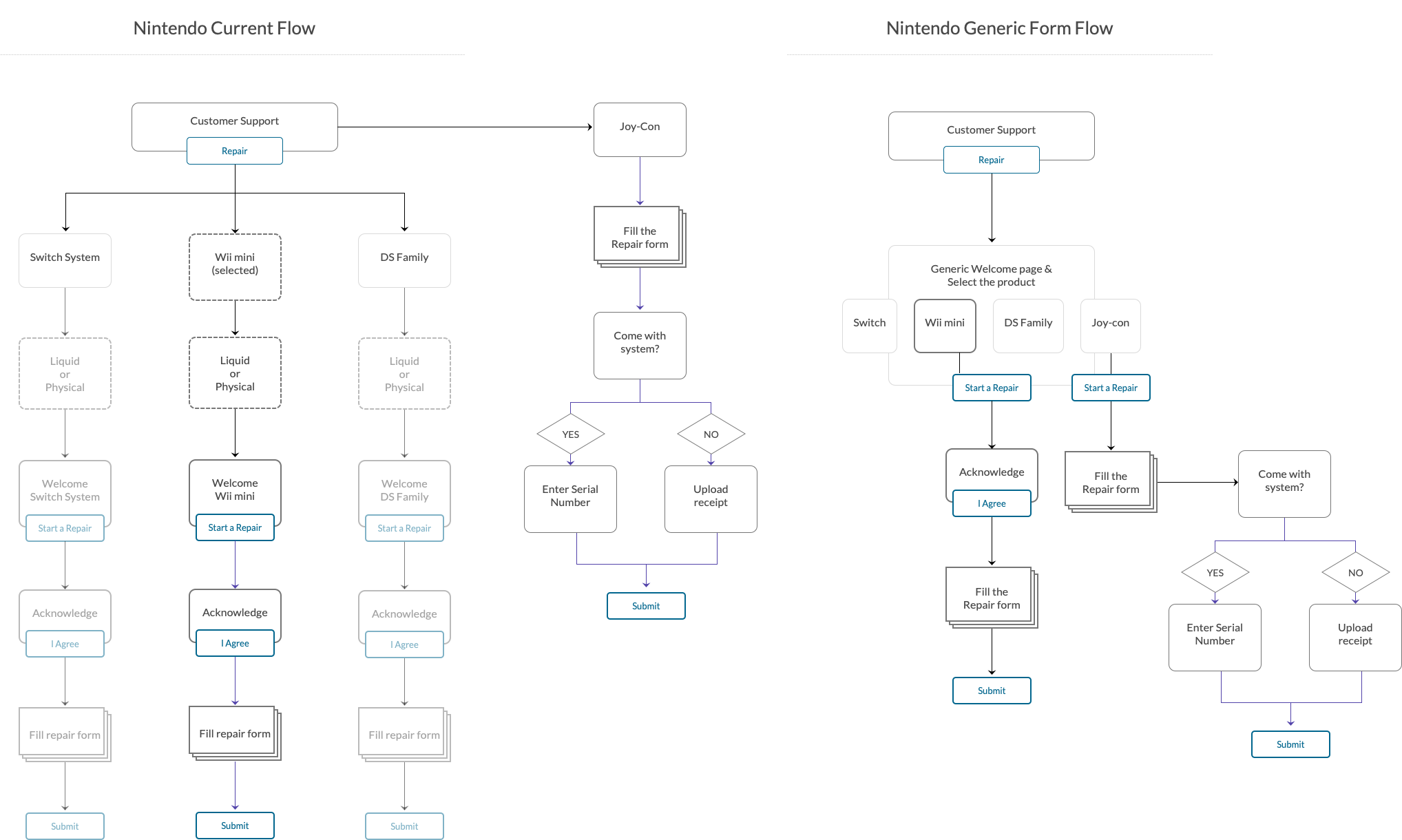
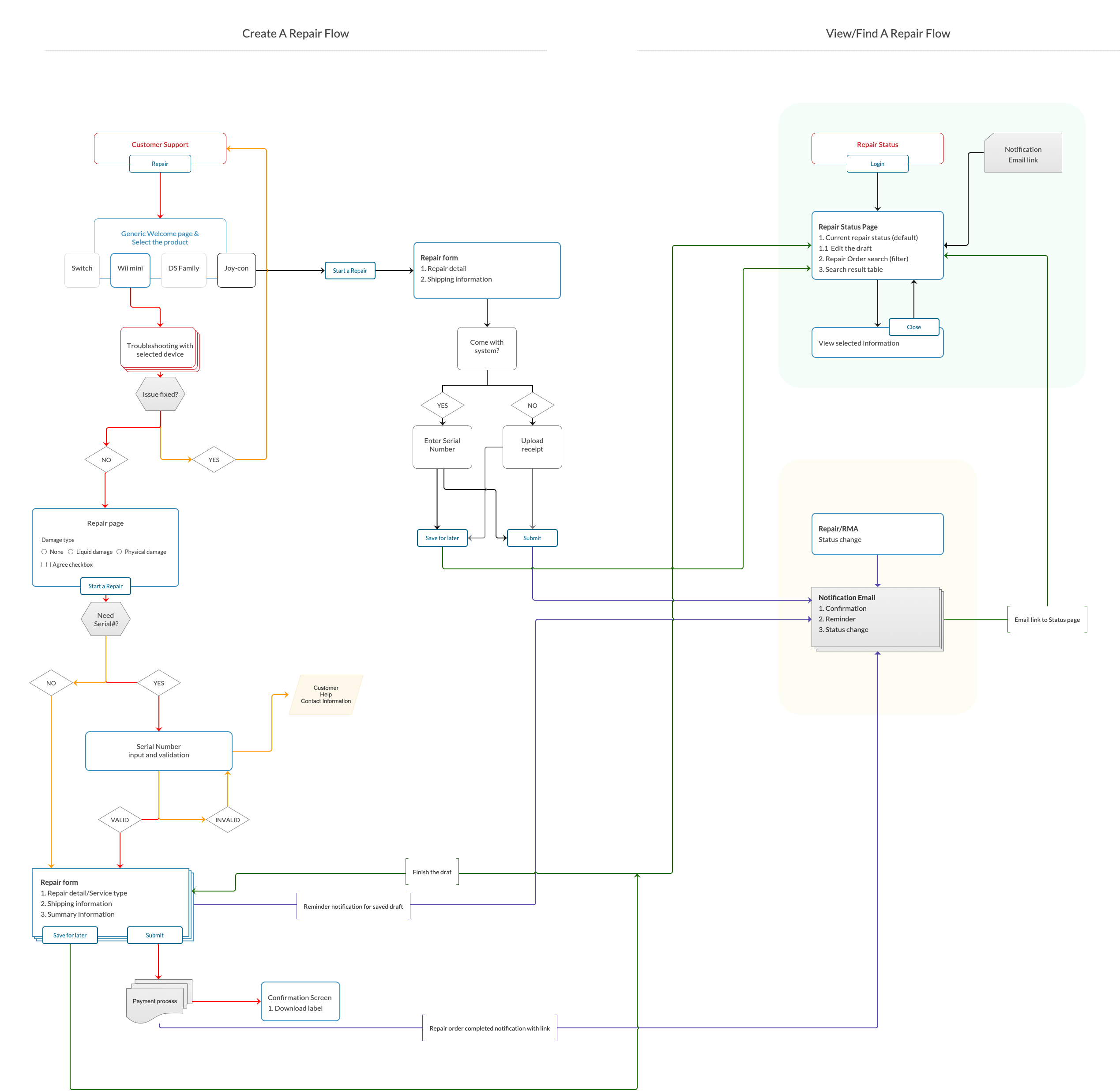
A. Redefined the Customer Portal User Flow
Analyzed existing repair + submission flows
To define the new user flow, I analyzed the existing “Repair Center” user flow and the online form submission flow to understand their processes.
Simplified and restructured the new journey
After reviewing the existing flow and business requirements, I have redefined the user flow for the “Repair Center” and the form submission process.
Delivered a seamless cross-platform experience Eliminated the visual and interaction gap between Netendo’s website and repair application, creating a unified end-to-end journey.
Strengthened brand trust and perception Users experienced a consistent interface, increasing confidence in the repair process and reducing perceived friction.
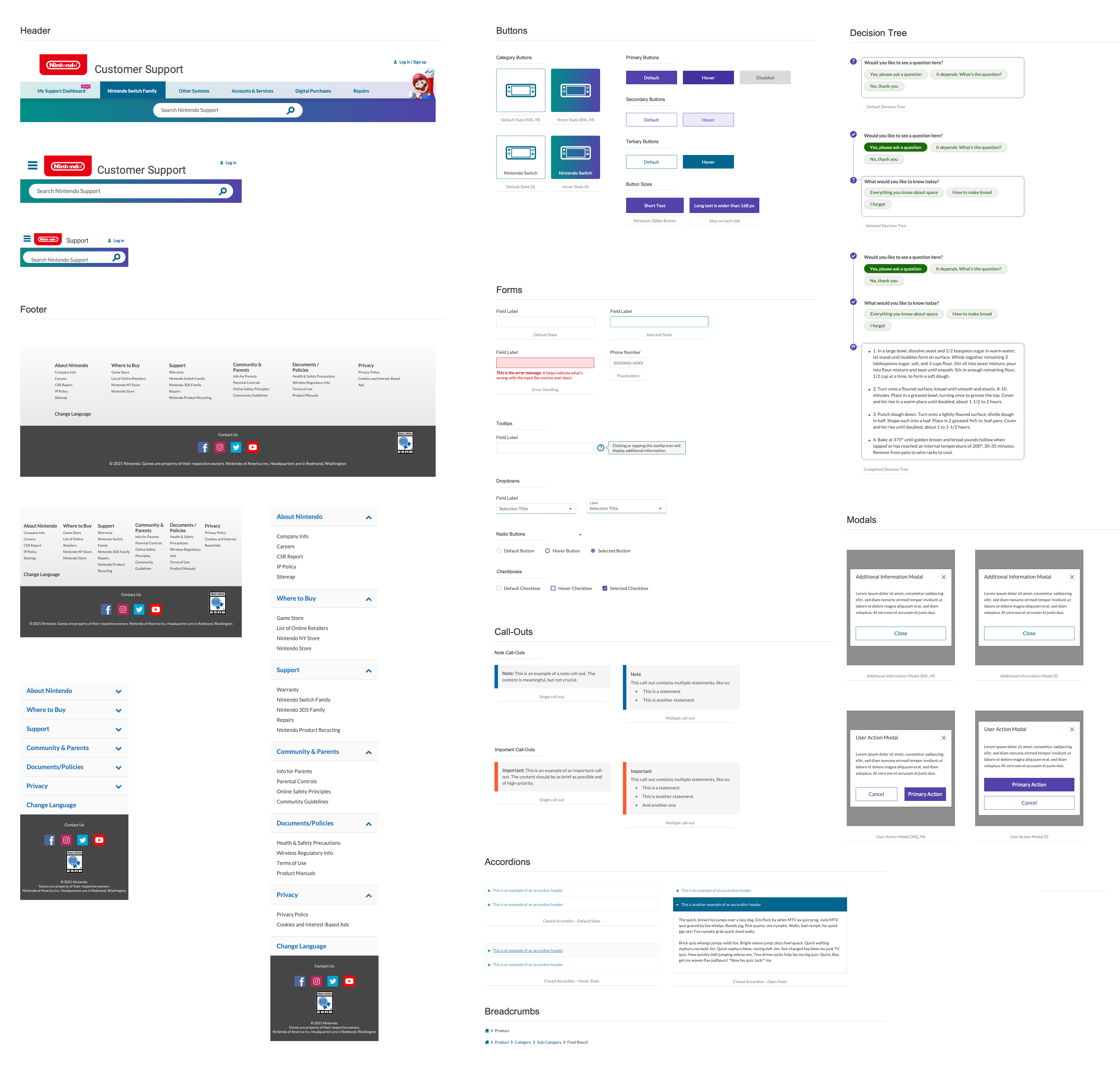
Reduced design–engineering inconsistencies Established a reusable styling approach that minimized future UI drift and reduced ad hoc fixes.
Improved efficiency for future customizations The systemized CSS and component structure enabled faster implementation for additional client-specific customizations.
I transformed a generic back-end tool into a branded product experience by systematizing design across front-end and back-end boundaries—ensuring every interaction felt cohesive, intentional, and trustworthy.